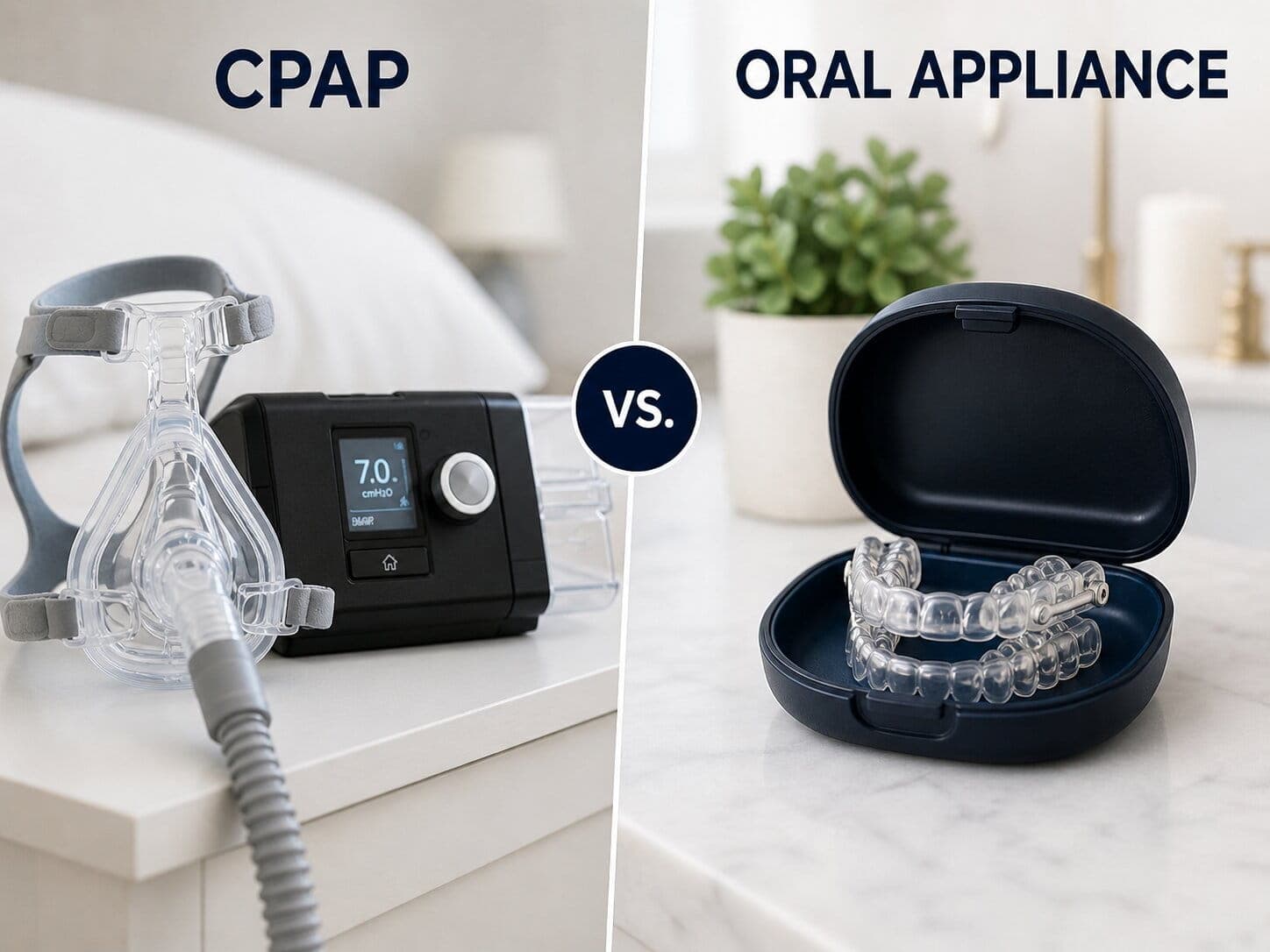
For some adults with diagnosed obstructive sleep apnea, a custom oral appliance may be a clinically appropriate CPAP alternative when CPAP is hard to tolerate or when a patient prefers another guideline-supported option. CPAP is often the gold standard for reducing apnea events, so treatment choice should involve diagnosis, medical guidance, and follow-up.
If you are looking for a CPAP alternative Florence KY patients can discuss with a dentist, you may already know that untreated sleep apnea is not just snoring. It can affect sleep quality, daytime energy, blood pressure, mood, and overall health. The challenge is that a treatment only helps when a patient can use it consistently.
Dr. Ron Elliott, DMD provides custom oral appliance therapy for appropriate patients with diagnosed obstructive sleep apnea, CPAP intolerance, or chronic snoring concerns. The Florence, KY office serves Northern Kentucky and Greater Cincinnati patients who want a quieter, portable option when clinically appropriate.
Struggling with CPAP or chronic snoring?
Have questions about sleep apnea appliances? Schedule a sleep therapy consultation with our Florence, KY dental team.
Why CPAP can be difficult for some patients
CPAP uses pressurized air to keep the airway open during sleep and is often highly effective at reducing apnea events in sleep lab measurements. For many patients, it is the right treatment. For others, the mask, hose, noise, dryness, pressure sensation, travel setup, or nighttime discomfort makes consistent use difficult.
That is where the conversation becomes practical. A treatment that is excellent on paper may not help much if it stays in the closet. Oral appliance therapy is not better than CPAP for everyone, but it can be a guideline-supported alternative for appropriate adults who cannot tolerate CPAP or prefer an alternate therapy under medical guidance.
How oral appliance therapy works
A custom mandibular advancement device is worn while you sleep. It gently positions the lower jaw forward, which can help create more room behind the tongue and reduce airway narrowing. The appliance is custom-fit to your teeth and adjusted over time for comfort, bite, and treatment progress.
This is not a drugstore mouthguard. Oral appliance therapy Northern Kentucky patients receive for sleep apnea should be custom, titratable, and monitored by a qualified dentist in coordination with medical diagnosis and follow-up. Many patients appreciate that the appliance is quiet, portable, and does not require a mask, hose, or bedside machine.
Who may be a candidate for a sleep apnea appliance?
Many good candidates have mild to moderate obstructive sleep apnea, CPAP intolerance, travel needs, loud snoring, or difficulty sleeping with a mask and hose. Some patients with more complex medical risk may need CPAP or another medical treatment instead. The right answer depends on the sleep study, symptoms, anatomy, medical history, and physician guidance.
Dr. Elliott evaluates airway considerations, teeth, bite, jaw comfort, TMJ history, dental health, and treatment goals. If an oral appliance is not appropriate, that should be explained clearly. A responsible sleep apnea dentist Florence KY patients choose should avoid overpromising and should coordinate with sleep medicine providers when needed.
Why a sleep study matters
Sleep apnea is a medical condition, so diagnosis generally requires a sleep study ordered or interpreted by a medical provider. The sleep study helps determine severity and whether oral appliance therapy may be appropriate. It also creates a baseline for follow-up and insurance documentation.
Private insurance and Medicare may have timing rules for sleep studies and documentation. Bringing your sleep study, CPAP history, medical insurance card, and physician information to the consultation helps the team understand the next step faster.
CPAP vs oral appliance therapy
CPAP generally produces the greatest reduction in apnea events in lab measurements. Custom oral appliances are generally less effective than CPAP at reducing AHI, but some patients use them more consistently because they are smaller, quieter, and easier to travel with. Real-world success depends on both clinical effect and actual use.
The best takeaway is not “CPAP vs mouthpiece.” It is “which treatment is medically appropriate and realistic for this patient?” If CPAP is working well, it may remain the best option. If CPAP is not being used, a custom sleep apnea appliance Florence KY patients can tolerate may be worth discussing.
What to bring to a consultation
Bring your sleep study, diagnosis, CPAP history, list of symptoms, medications, insurance cards, and questions. If you have jaw pain, clenching, dental mobility, dentures, or significant dental work, mention that early because it can affect appliance planning.
Smith & Elliott Dental Associates does not provide at-home sleep studies in the office. When diagnosis or medical follow-up is needed, patients can be guided toward appropriate sleep medicine resources. Once diagnosis is confirmed, Dr. Elliott can evaluate whether dental sleep therapy is a good fit.
When to call about sleep apnea or snoring
Call if CPAP is difficult to use, your partner notices loud snoring or gasping, or you have morning headaches, daytime sleepiness, or a recent sleep apnea diagnosis.
- Diagnosed obstructive sleep apnea
- CPAP intolerance or poor consistency
- Chronic snoring or gasping
- Morning headaches or daytime fatigue
- Questions about oral appliance therapy